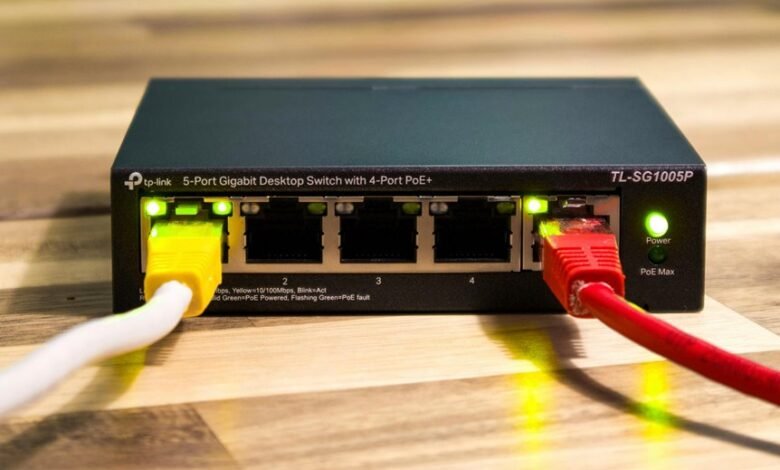
The Stellar Nexus 967961626 Hyper Circuit represents a high-density, modular neural-processor network designed for rapid data routing and computation. Its topology emphasizes fault-tolerant routing and dynamic resource allocation within a constrained hardware footprint. In quantum astronomy, it promises near-instant data transit via Transgalactic protocols and quantum harmonics, while confronting material, thermal, and fabrication constraints. Its practical viability remains contingent on integrated engineering advances and scalable governance of autonomous computation, inviting scrutiny of implementation paths and risk factors.
What Is the Stellar Nexus 967961626 Hyper Circuit?
The Stellar Nexus 967961626 Hyper Circuit is a high-density, integrated neural-processor network designed to manage ultra-fast data routing and computation within a constrained hardware footprint. It operates as a scalable, modular architecture enabling parallel processing and low-latency communication. Central concepts include stellar nexus topology, fault-tolerant routing, and dynamic resource allocation for flexible, autonomous computation in constraint environments. Hyper circuit.
How Does the Hyper Circuit Reshape Quantum Astronomy and Networks?
How does the Hyper Circuit alter the landscape of quantum astronomy and networks by enabling near-instantaneous data routing and modular scalability within constrained hardware footprints? It redefines data transit, leveraging Transgalactic protocols and Quantum harmonics to minimize latency, maximize fidelity, and support dynamic network topologies. The result is scalable observatories and distributed sensors with unified, efficient interstellar communication.
Engineering Hurdles to Turning the Hyper Circuit Into Reality
What engineering hurdles must be overcome to convert the Hyper Circuit from concept to deployable infrastructure? The analysis focuses on material resilience, thermal management, and reproducible fabrication.
Innovative materials must withstand extreme flux while maintaining coherence.
System integration demands robust interconnects, synchronized timing, and fault tolerance.
Modularized components enable scalable deployment, reduce risk, and ensure maintainable performance under variable cosmological conditions.
The Future Implications: Adaptive Civilizations and the Cosmic Data Loom
Could adaptive civilizations leverage the Cosmic Data Loom to recalibrate governance, resilience, and interstellar collaboration, and what systemic implications would arise from such pervasive, real-time information networks?
The cosmic loom frames adaptive civilizations as information-enabled actors, optimizing resource distribution, risk assessment, and diplomatic signaling. However, centralized data sovereignty raises sovereignty concerns, ethical safeguards, and vulnerability to manipulation within distributed governance structures.
Conclusion
In the quiet hum of a cooled chamber, the Stellar Nexus 967961626 Hyper Circuit gleams as a lattice of potential, mapping futures in electric constellations. Its fault-tolerant routing and modular cores promise near-instant data transit, weaving quantum harmonics into a tactile fabric of networks. Yet behind the glow lie heat, fabrication, and material limits — challenges that temper ambition with measured rigor. If solved, cosmos-sized data loom may emerge from disciplined engineering and disciplined patience.