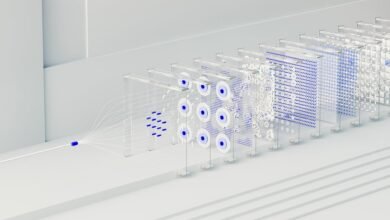
Quantum Beam 954487668 Neural Prism proposes a quantum-inspired beam concept paired with a neural-prism architecture to reconfigure data flow and gradient pathways. The claim is faster optimization through modular reorganization and governance for deployment. Skeptics demand precise definitions, measurable outcomes, and transparent benchmarks. Proponents point to potential gains and adaptability, but real-world impact remains uncertain. The key questions lie in scalability, interoperability, and independent evaluation, leaving readers with unresolved trade‑offs and the need for rigorous, interactive validation.
What Is Quantum Beam 954487668 Neural Prism?
What is Quantum Beam 954487668 Neural Prism? The term describes a theoretical construct combining a quantum beam with a neural prism concept. Critics question its coherence, demanding clear definition and measurable outcomes. Terms like optimization architecture imply structured design, yet real world applications remain speculative. Skeptics seek transparent metrics, reproducibility, and freedom from hype before accepting any claimed capabilities.
How the Neural Prism Architecture Accelerates Optimization
The Neural Prism Architecture accelerates optimization by reconfiguring how information flows between model components and data representations. It presents a skeptical view of blanket speedups, emphasizing measurable gains over hype. By reorganizing gradients, representations, and feedback loops, it seeks tangible improvements in neural optimization while acknowledging overhead. Quantum acceleration remains speculative, with cautious, empirical validation required for robust claims.
Real-World Use Cases and Potential Impacts
Real-World use cases for the Neural Prism Architecture span domains where optimization bottlenecks impede progress, such as large-scale machine learning training, real-time decision systems, and resource-constrained inference.
Proponents cite potential gains in efficiency and interpretability, yet skeptics warn of overhyped claims.
Interactive benchmarks and governance frameworks are essential to transparent evaluation, risk assessment, and accountable deployment.
Freedom-seeking practitioners favor measured adoption over premature promises.
Key Challenges and Practical Hurdles to Adoption
Despite initial optimism, several practical hurdles temper the adoption of the Neural Prism architecture. The audience seeks freedom, yet concerns persist: interoperability with existing stacks, opaque optimization processes, and limited real-world validation. Novel training strategies must prove scalable beyond labs, while fault tolerance remains fragile under heterogeneous hardware. Transparent benchmarking, modular design, and clear governance will determine practical viability and voluntary, independent adoption.
Conclusion
The Quantum Beam 954487668 Neural Prism offers a provocative reimagining of data flow and optimization. Yet its promises hinge on scalable, interoperable, and fault-tolerant implementations validated by independent benchmarks. Until concrete metrics and transparent results emerge, enthusiasm should be tempered. The architecture should prove its value through repeatable gains across diverse tasks. As the adage goes: “Trust, but verify.” Skepticism remains warranted as researchers weigh real-world impact against theoretical appeal.